Travelling Seminar ERUA 2026 Successfully Completed
“Co-Creating Educational Videos: Media Pedagogy, AI Tools and Student Voice”
Universidad de Las Palmas de Gran Canaria | 25–29 May 2026
1. Purpose and context of the action
It is with great satisfaction that we announce the successful completion of the Travelling Seminar 2026, which took place at the University of Las Palmas de Gran Canaria (ULPGC) from May 25 to May 29, 2026. This action constitutes a joint initiative of the Department of Primary Education of the University of the Aegean and the University of Las Palmas de Gran Canaria, with Academic Coordinators Professor Loisos Sofos from the University of the Aegean and Professor Julio Pérez Sánchez from ULPGC.
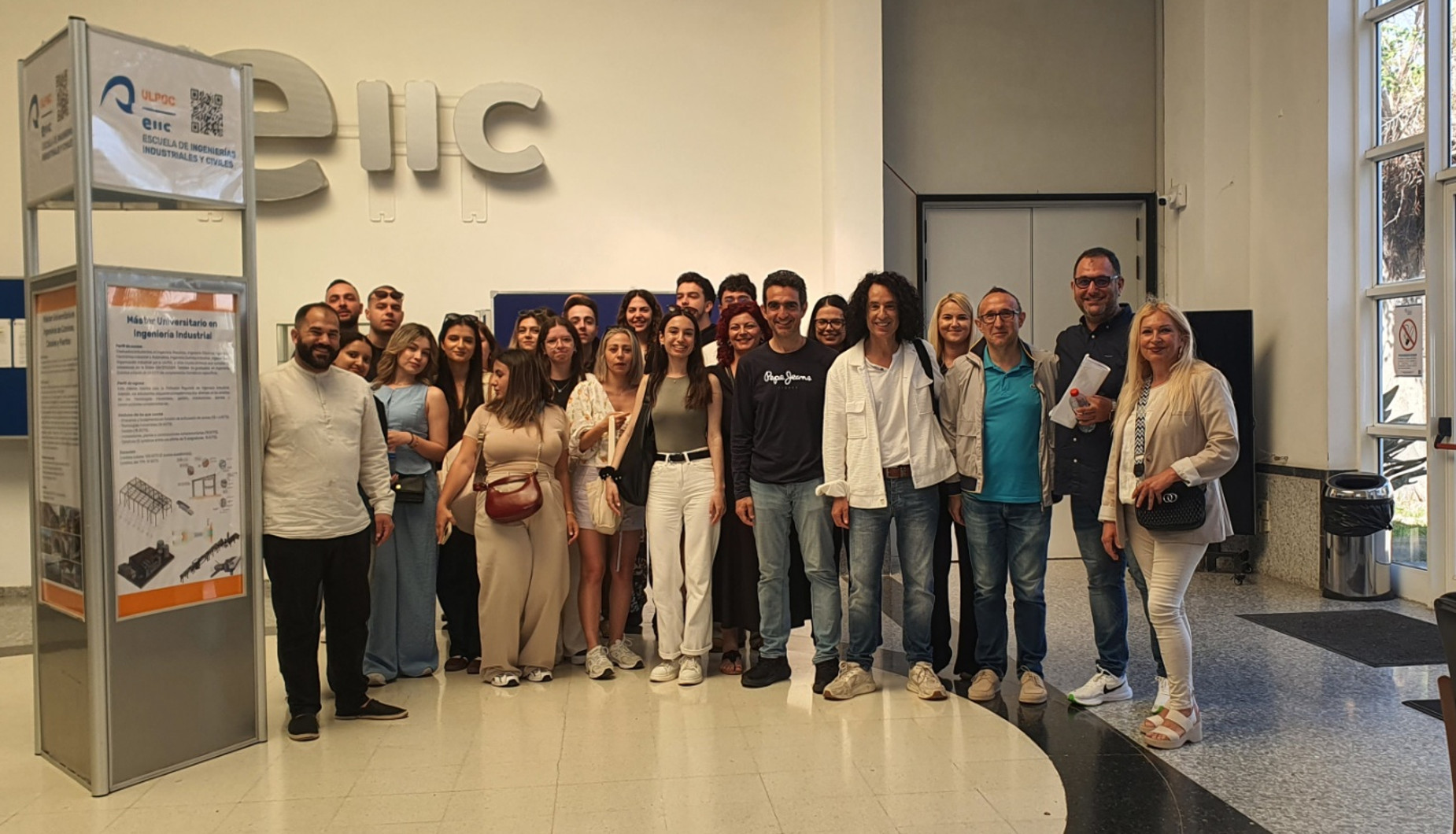
The purpose of the Travelling Seminar was the development and implementation of innovative educational practices through the collaborative creation of educational videos. The action was integrated into the broader objectives of the ERUA (European Reform University Alliance) network to promote inter-university cooperation among the network’s eight partner European universities: Paris 8 University (France), SWPS University (Poland), the University of Macerata (Italy), Mykolas Romeris University (Lithuania), Europa-Universität Viadrina (Germany), the University of the Aegean (Greece), Universidad de Las Palmas de Gran Canaria (Spain), and New Bulgarian University (Bulgaria).
The seminar focused on three interrelated axes: Media Pedagogy as a framework for designing educational videos, the utilization of Artificial Intelligence tools in instructional production, and the enhancement of student voice as active co-creators of learning content. The central theme, “Science in the real world – Science for society,” allowed for the connection of scientific knowledge with contemporary social and environmental challenges, in full alignment with the ERUA network mission.
2. Official Program of the Travelling Seminar
The five-day seminar program, with a total workload of 45 hours corresponding to 1.5 ECTS, was organized into four thematic axes: Orientation, Storytelling and storyboard, Field Production & Editing, and Screening. The table below presents the detailed structure of the program.
| Day / Axis | Presentation title | Content and speaker |
| Monday 25/05/2026 — Thematic axis: Orientation | ||
| 10:00–11:00 | Welcome and seminar opening | Presentation of Universities, subject matter, and seminar structure |
| 11:00–12:15 | Building the learning community | Ice-breaker activities, discussion on student voice |
| 12:30–14:00 | Students, teams and first ideas | Formation of 6 mixed groups, initial exploration of themes |
| 15:00–16:30 | Campus / city contextual activity | Introduction to the academic and urban environment |
| 16:30–17:00 | Daily reflection | Daily reflection |
| Tuesday 26/05/2026 — Thematic axis: Storytelling & storyboard | ||
| 09:00–10:30 | Examples of Educational Videos | Student presentations, discussion of examples |
| 10:45–11:45 | Presentation of video types | Typology of educational videos |
| 12:00–13:00 | Steps for creating a video | Stages of educational video production |
| 13:15–14:15 | Video editing workshop | Video editing with Clipchamp |
| 15:15–16:30 | From idea to storyboard | Guided group work, distribution of technical equipment |
| 16:30–17:00 | Daily Reflection | Reflection on design choices |
| Wednesday 27/05/2026 — Θεματικός άξονας: Field Production | ||
| 09:00–17:00 | Field production | Filming in the natural and urban environment of Gran Canaria |
| Thursday 28/05/2026 — Thematic axis: Editing | ||
| 09:00–17:00 | Editing and montage | Editing workshop, utilization of AI tools |
| Friday 29/05/2026 — Thematic axis: Screening | ||
| 09:00–10:30 | Final editing and preparation | Final adjustments, preparation of presentations |
| 10:45–12:15 | Public screening of student videos | Public screening of the final videos |
| 12:30–13:30 | Pedagogical discussion and reflection | Pedagogical commentary, collective reflection |
| 13:30–14:00 | Seminar closure and evaluation | Evaluation and closing of the seminar |
Note: The program was completed with the contribution and cooperation of the local academic community, featuring field visits and the implementation of shared teaching methods by ULPGC.
3. Participating students
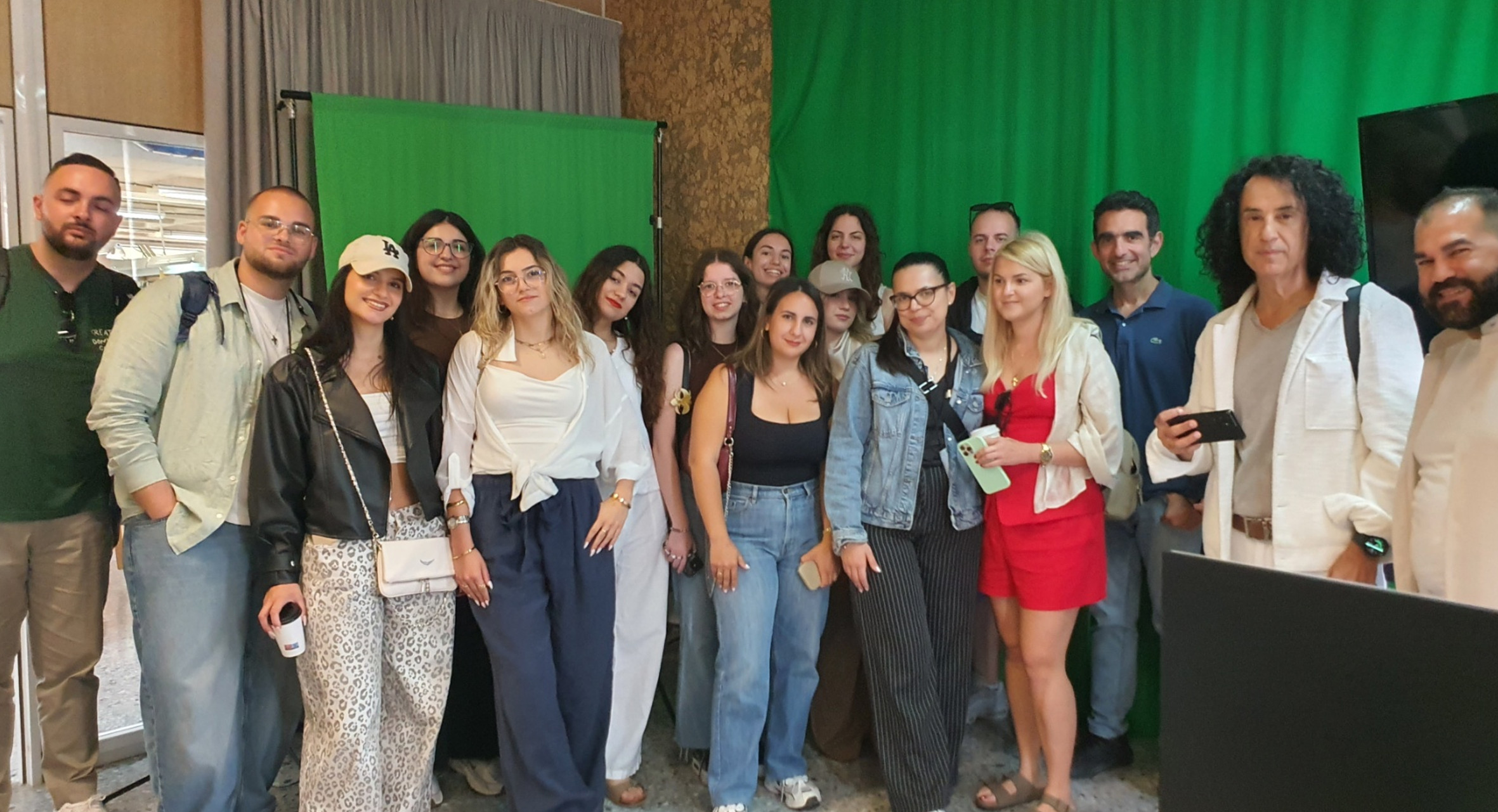
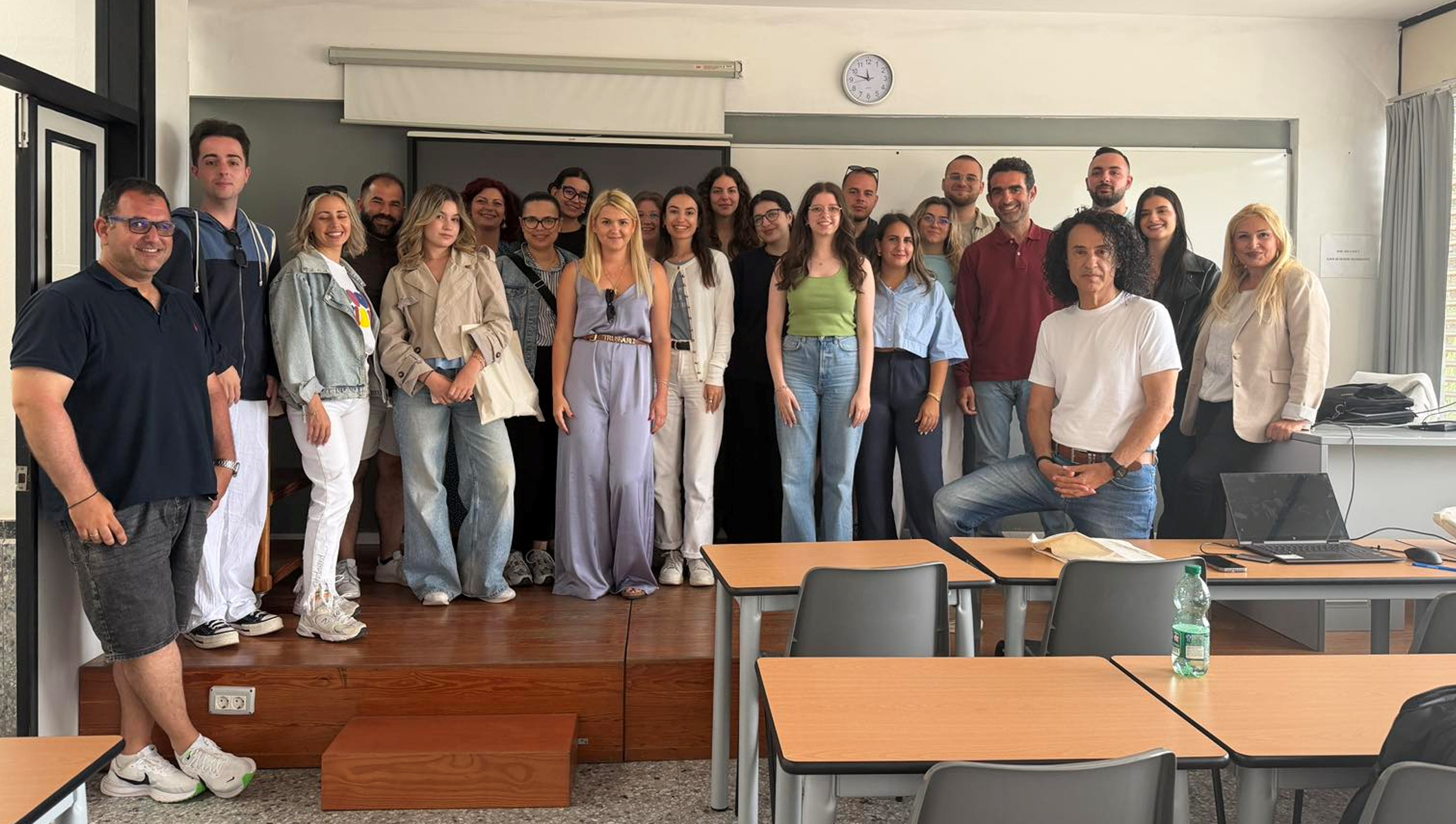
Twenty students from the Department of Primary Education of the University of the Aegean participated in the Travelling Seminar, organized into six mixed educational video production groups. By name, the participants were:
- Group 1: Maria Xypolitou, Iosifina Mavropoulou, Anastasia Raditsa.
- Group 2: Ioanna Nikita, Aggeliki-Aikaterini Kritikou, Effrosyni Kypraiou, Aggelos Rizos.
- Group 3: Maria Kassimi, Spyros Spyrou, Charikleia Moustaka.
- Group 4: Georgia Voutsi, Alexandra Christidi, Spyridoula Strati.
- Group 5: Eleni Kousteni, Eleni-Anna Kouzi, Styliani Avramidi.
- Group 6: Emmanouil Rapanis, Panagiotis Skarlatos, Georgios Chaidas, Zoi Koutsiogiannaki.
Academic responsibility for the action on behalf of the University of the Aegean rested with Professor Loisos Sofos, with the scientific and teaching support of Mr. Dimitris Spanos, a member of the Laboratory Teaching Staff (EDIP) of the Department of Primary Education and Mr. Panagiotis Kanychis, a PhD Candidate and Principal of the 1st Experimental Primary School of Rhodes – University of the Aegean, while cooperation on behalf of ULPGC was coordinated by Professor Julio Pérez Sánchez.
4. Themes of student work
The six groups worked within the framework of the central theme “Science in the real world – Science for society,” which was articulated across ten thematic fields designed to align with the goals of the ERUA network, particularly regarding student-centered learning, societal engagement, sustainability, interdisciplinarity, and open access to knowledge. Specifically, the thematic fields were as follows:
- Ocean and marine science: Colors of the sea, pollution of marine ecosystems, waves, microplastics
- Climate and sustainability: Impacts of climate change on islands, urban temperatures, renewable energy sources
- Engineering in daily life: Resistance of buildings to strong winds, port design, construction materials
- Physics around us: Atmospheric pressure, how wind works, friction in daily life
- Science for all: Scientific communication to children and the general public, different ways of learning
- Science in daily life: Physics of walking, energy in daily life, how simple objects work
- Human-centered science: Perception of sound and light, how attention works, effective learning
- Real and virtual experiments: Differences between real experiments and digital simulations
- Problem and solution: Real environmental problems and scientific solutions
- Student voice: The importance of science in students’ lives, youth perspective on the future
5. Titles of videos produced by the Groups
Utilizing the above themes, the six student groups produced five completed educational videos, which were screened publicly on the final day of the seminar. The titles of the final productions are as follows:
Video 1. Gran Canaria: The Volcano Awakens – Zero Hour
This video is a short educational thriller (3-4 minutes), implemented in a comic / graphic novel visual style. The story is set in Gran Canaria. When sensors record disturbing activity and the volcano begins to emit its first columns of smoke behind the iconic Roque Nublo rock, a trio of experts rushes in a research van to the Bandama crater for on-site measurements. Through their anxious journey and field autopsy, the dual nature of volcanoes unfolds (a blessing for the land and tourism, but also a danger), the way a modern society must manage coexistence with a dormant volcano, and the critical importance of education and readiness drills in schools. The video closes with the stabilization of the situation, sending a strong message of safety: “Knowledge defeats fear.”
Video 2. Discovering Friction in Gran Canaria
This is a short educational video (3.5 minutes), designed for Primary School students, on the concept of friction. The action takes place in Gran Canaria and utilizes authentic footage from the island’s beaches, surfers moving on the waves, as well as examples from daily life. Through the observation of the natural environment, students are introduced to friction as a force that resists motion and affects the way objects move. The concept is approached in a simple and understandable way through walking on sand, the movement of surfers in the water, the use of brakes on a vehicle, and through simple experiments. The video combines scientific knowledge with experiential and inquiry-based learning, encouraging students to observe, experiment, and draw conclusions about the role of friction in daily life. It concludes with the message that Physics is all around us and can be understood through experiences, observations, and exploration of the real world.
Video 3. Discovering science in our daily life in the Atlantic
This constitutes an educational video (2-3 minutes) addressed to 6th-grade primary school students. It presents the relationship between science and daily life in a simple, pleasant, and creative way. Through beautiful footage from the Canary Islands, students travel to an exploration environment and discover that energy is all around us. The video focuses on two basic forms of energy: kinetic and chemical. Kinetic energy is presented through the movement of people, athletes, surfers, butterflies, and water. Simultaneously, chemical energy is linked to food, which gives the body the strength to move, play, and practice sports. In this way, the video helps students understand that science does not exist only in school textbooks but constitutes an integral part of our daily routine.
Video 4. Volcanic Eruption: From Ash to Life
This educational video constitutes a comprehensive geological lesson explaining in a simple and understandable way how volcanic eruptions shaped the Canary Islands in the Atlantic Ocean. Through rich visual material, viewers are introduced to basic scientific concepts, such as the distinction between underground magma and lava flowing on the surface, the structure of the volcanic crater, and the materials released during an eruption. Simultaneously, the video highlights the deeper environmental significance of volcanoes, showing how initial destruction is transformed into a source of life, as the solidified ground creates new expanses of land capable of hosting ecosystems, human societies, and new civilizations.
Video 5. Buoyancy and Floating: Real Experiment and Virtual Lab
The video titled “Buoyancy and Floating: Real Experiment and Virtual Lab” is an educational video 2-3 minutes in duration addressed to students as well as educators. Through a simple and understandable example, it presents the concepts of buoyancy and floating, as well as two different ways of scientifically investigating them: the real experiment and the virtual lab. An experiment is performed with water, salt, and an egg, observing how the change in density affects it. Subsequently, a digital simulation is used, where parameters can be changed and results observed immediately. Through the comparison of the two methods, the video highlights the advantages and limitations of both real experiments and digital laboratories. In this way, it also becomes easier to perceive the important role new technologies have in modern science education.
Video 6. The Secrets of the Sea
The video “The Secrets of the Sea” is an educational video, approximately 3 minutes long, for children that aims to introduce viewers to basic elements of the marine environment and enhance their ecological consciousness. Through images and videos from beaches, it presents how the color of the sea changes depending on depth, temperature, and weather conditions, as well as how waves are created by wind action and energy transfer. Subsequently, reference is made to microplastics and marine pollution, emphasizing their negative impacts on marine organisms and the ecosystem. Simultaneously, a beach cleaning action is shown, highlighting the importance of protecting the seas. The video concludes with a message about recycling and reducing plastic use, stressing that we can all contribute to maintaining a clean and healthy ocean.
The productions successfully capture the connection of scientific knowledge with the local environment of Gran Canaria, while simultaneously highlighting the students’ creative and critical perspective on contemporary scientific and social issues.
6. Acknowledgments
The completion of the Travelling Seminar was the fruit of a broader collaborative initiative established within the framework of the European Reform University Alliance (ERUA) network. From this position, warm thanks are expressed to the ERUA network, in which the University of the Aegean participates, both for the financial and institutional support that made the realization of this action possible, and for the steadfast vision of promoting innovative educational practices among European member universities.
Special thanks are addressed to the Universidad de Las Palmas de Gran Canaria, and particularly to Professor Julio Pérez Sánchez, for the hospitality, academic cooperation, and substantial support of the action. The cooperation between the two member universities of the ERUA network, the University of the Aegean and ULPGC, was consolidated through this joint effort and creates the prerequisites for further collaborative actions in the fields of Media Pedagogy, the utilization of Artificial Intelligence in teaching, and the internationalization of students’ educational experience.
Finally, warm thanks are expressed to the twenty students of the Department of Primary Education who participated with enthusiasm, creativity, and academic maturity in the action, embodying in practice the value of student voice as a driving force of the educational reform served by the ERUA network.
Professor Loisos Sofos
Dean of the Faculty of Humanities
Department of Primary Education, University of the Aegean
Scientific Coordinator of the Travelling Seminar ERUA 2026